
1. Sarrera
Thank you for choosing the VEVOR CT-612 Manual Pipe Bender. This tool is designed for precise bending of copper, aluminum, and thin-walled steel or stainless steel pipes. It features a 3-in-1 design, accommodating pipe diameters of 1/4 inch (6.35 mm), 3/8 inch (9.5 mm), and 1/2 inch (12.7 mm), and allows for bends from 0 to 180 degrees. This manual provides essential information for safe operation, setup, maintenance, and troubleshooting to ensure optimal performance and longevity of your pipe bender.
2. Segurtasun-argibideak
Always observe the following safety precautions when using the VEVOR CT-612 Manual Pipe Bender:
- Irakurri eskuliburua: Familiarize yourself with all instructions and warnings before operation.
- Babes-ekipoak jantzi: Always wear safety glasses to protect against flying debris. Gloves are recommended for better grip and hand protection.
- Tresna ikuskatu: Before each use, check the pipe bender for any signs of damage, wear, or loose parts. Do not use a damaged tool.
- Lan-pieza segurua: Ensure the pipe is properly seated and secured in the bending groove to prevent slippage and injury.
- Maintain a Stable Stance: Use the tool on a stable surface and maintain good balance to prevent accidents.
- Gehiegi makurtzea saihestu: Do not attempt to bend pipes beyond their material limits or the tool's 180-degree capacity, as this can damage the pipe or the tool.
- Pipe Wall Thickness: This tool is suitable for pipes with a wall thickness of 0.5 mm to 1.2 mm. Bending pipes thinner than 0.5 mm may cause damage or kinking.
- Mantendu garbi: Keep hands and fingers away from pinch points during operation.
- Gorde seguru: Store the tool in a dry, secure place, out of reach of children and unauthorized users.
3. Produktua amaitu daview eta Osagaiak
The VEVOR CT-612 Manual Pipe Bender is a robust tool designed for efficient and precise pipe bending. Key components include:
- Bending Formers: Integrated formers for 1/4", 3/8", and 1/2" pipe diameters.
- Heldulekuak: Ergonomic, anti-slip rubberized handles for comfortable grip and leverage.
- Angle Scales: Clear, engraved angle markings (0-180°) for precise bending.
- Movable Hook: Secures the pipe during bending for stability.
- Alignment Marks: Indicators for proper pipe positioning.
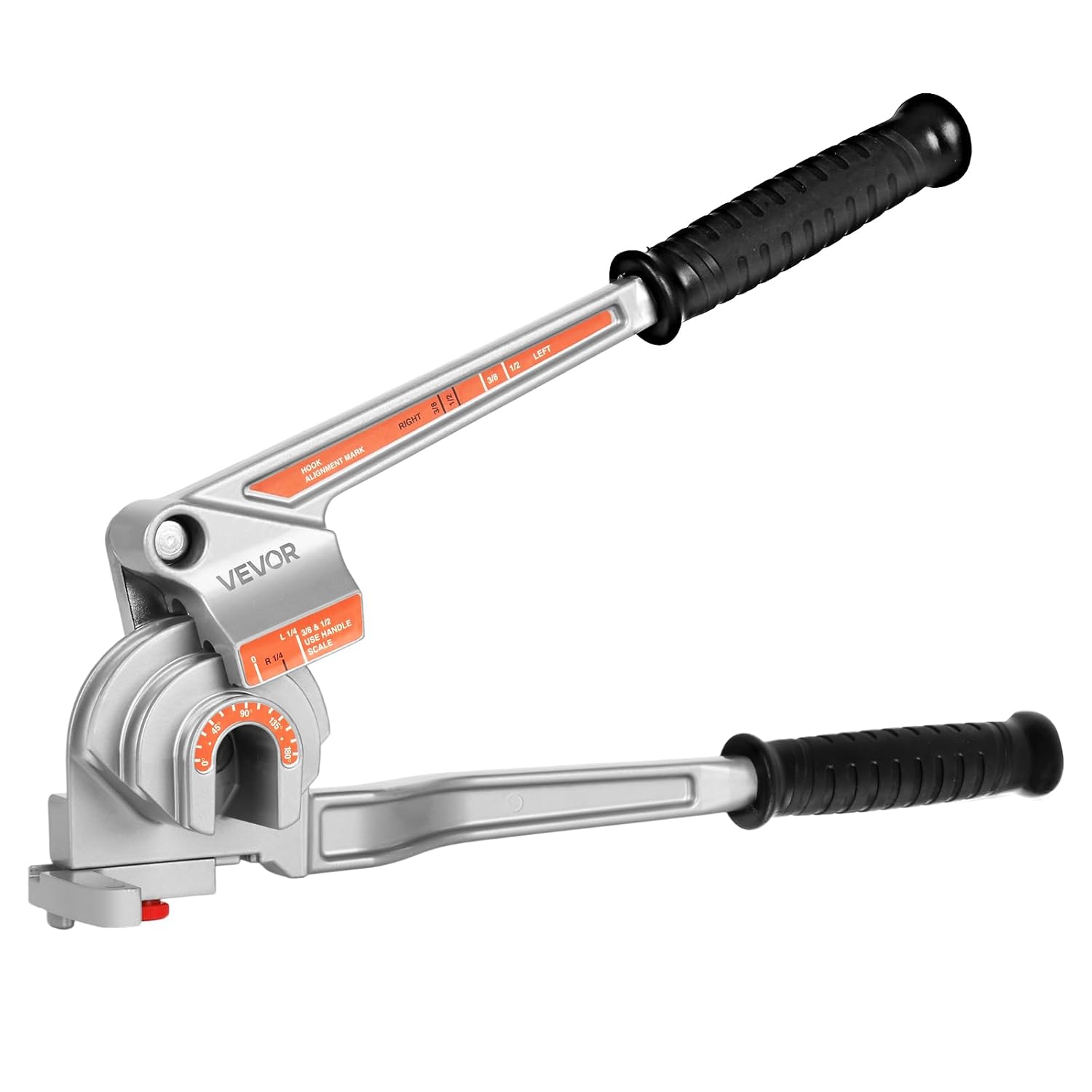
1 Irudia: Gainetikview of the VEVOR CT-612 Manual Pipe Bender. This image shows the complete tool with its handles, bending head, and various components.

Figure 2: Close-up of the 3-in-1 bending design, illustrating the different pipe sizes (1/4", 3/8", 1/2") accommodated by the tool.
4. Zehaztapenak
| Ezaugarri | Xehetasuna |
|---|---|
| Modelo zenbakia | CT-612 |
| Tolestura angelua | 0° - 180° |
| Applicable Pipe O.D. | 1/4" (6.35 mm), 3/8" (9.5 mm), 1/2" (12.7 mm) |
| Applicable Pipe Materials | Copper, Aluminum, Thin Iron, Thin Stainless Steel |
| Hodiaren hormaren lodiera | 0.5 mm - 1.2 mm |
| Material nagusia | 45# Steel + Aluminum Alloy + ABS + TPU |
| Pisu garbia | 1.1 kg (2.42 lb) |
| Neurriak | 42.49 x 10.01 x 10.01 cm |

Figure 3: Visual representation of the pipe bender's specifications, including bending angle, applicable pipe sizes, and materials.
5. Konfigurazioa
Before beginning any bending operation, ensure your workspace is clean, well-lit, and free from obstructions. No assembly is required for the VEVOR CT-612 Manual Pipe Bender.
- Select the Correct Former: Identify the appropriate bending groove on the tool that matches the outer diameter of your pipe (1/4", 3/8", or 1/2").
- Prestatu hodia: Ensure the pipe is clean, free of burrs, and cut to the desired length. Mark the bending point on the pipe if necessary.
- Adjust the Movable Hook: Position the movable hook to align with the chosen bending groove.
6. Funtzionamendu-argibideak
Follow these steps for safe and effective pipe bending:
- Insert the Pipe: Carefully insert the pipe into the selected bending groove and under the movable hook. Ensure the pipe is snug and properly aligned with the alignment marks on the tool.
- Position for Bending: Adjust the pipe so that the desired bending point aligns with the center of the bending former.
- Aplikatu indarra: Hold both handles firmly. Apply steady, even pressure to the handles, slowly bringing them together. The pipe will begin to bend around the former.
- Monitor the Angle: Observe the angle scales on the tool to achieve the desired bend angle (from 0° to 180°). Bend slowly to prevent kinking or deformation.
- Release the Pipe: Once the desired angle is reached, release the pressure on the handles and carefully remove the bent pipe from the tool.
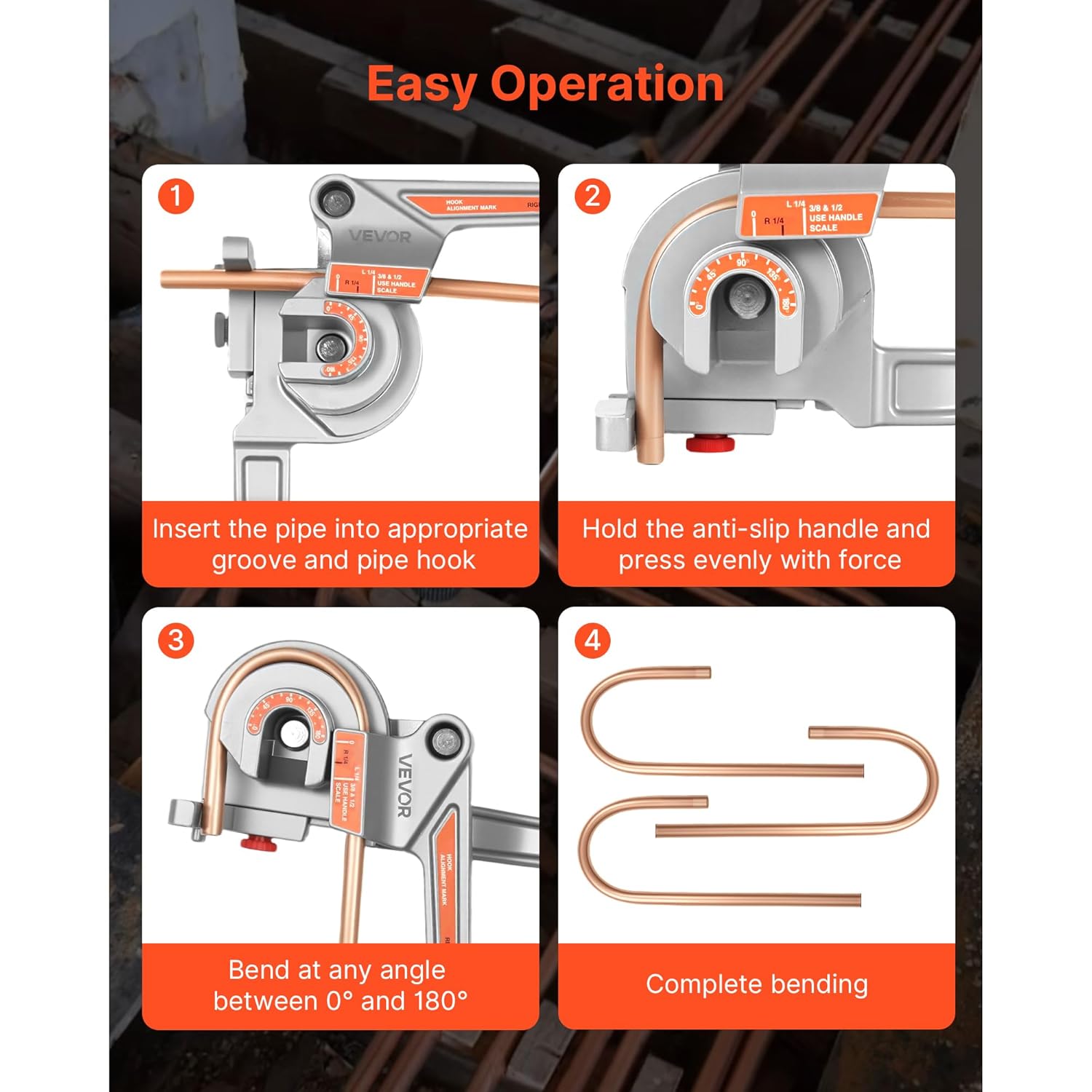
Figure 4: Step-by-step guide illustrating the process of inserting the pipe, applying force, monitoring the bend, and completing the operation.

Figure 5: Demonstration of the tool's ability to create bends from 0 to 180 degrees, showing examples of 90-degree and 180-degree bends.

Figure 6: An image showing the VEVOR CT-612 Manual Pipe Bender actively being used to bend a copper pipe.
7. Mantentzea
Proper maintenance ensures the longevity and reliable performance of your pipe bender:
- Garbiketa: After each use, wipe down the tool with a clean, dry cloth to remove any dust, dirt, or metal shavings.
- Lubrifikazioa: Periodically apply a light coat of machine oil to the pivot points and moving parts to ensure smooth operation and prevent rust.
- Ikuskapena: Regularly inspect the bending formers, handles, and movable hook for wear, damage, or deformation. Replace any worn or damaged parts immediately.
- Biltegiratzea: Store the pipe bender in a dry environment to prevent corrosion. Keep it away from direct sunlight and extreme temperatures.
8. Arazoak
Hona hemen arazo ohikoenetako batzuk eta haien irtenbide posibleak:
| Arazoa | Kausa posiblea | Irtenbidea |
|---|---|---|
| Pipe kinks or flattens during bending. | Incorrect pipe size selected, pipe wall too thin, bending too fast, or pipe material is too soft/hard. | Ensure the correct former size is used. Verify pipe wall thickness is between 0.5-1.2 mm. Bend slowly and steadily. Consider using a pipe filler for very soft materials if kinking persists. |
| Bend angle is inaccurate. | Pipe not properly aligned, angle scale misread, or inconsistent pressure applied. | Ensure pipe is aligned with marks. Read the angle scale carefully. Apply consistent, even pressure throughout the bend. |
| Difficulty in bending. | Pipe material is too thick or too hard for manual bending, or tool requires lubrication. | Check pipe specifications against tool capacity. Apply lubricant to pivot points. For very hard materials, a different bending method may be required. |
| Tool feels stiff or squeaks. | Lubrifikazio falta, zikinkeria pilatzea. | Clean the tool thoroughly and apply a light machine oil to all moving parts. |
9. Bermea eta Laguntza
VEVOR produktuak iraunkortasun eta errendimendu handikoak izateko diseinatuta daude. Bermeari buruzko informazio zehatza lortzeko, kontsultatu erosketarekin batera datorren berme-txartela edo bisitatu VEVOR webgune ofiziala. website. If you encounter any issues or require technical assistance, please contact VEVOR customer support through their official channels. Provide your model number (CT-612) and purchase details for faster service.
Harremanetarako informazioa: Please refer to the VEVOR official website or your purchase documentation for the most up-to-date customer support contact details.